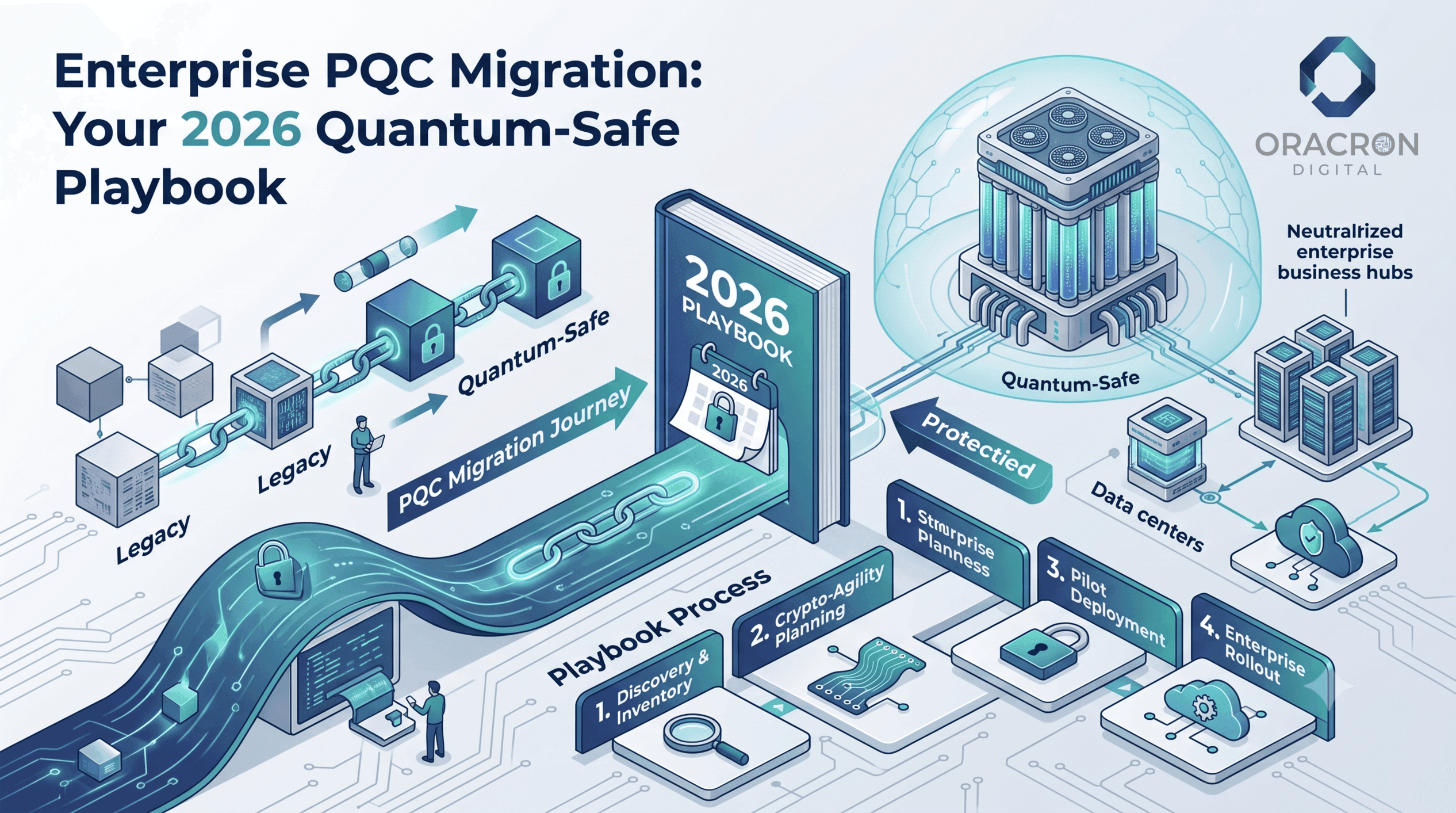
PQC is urgent for enterprises due to 'harvest now, decrypt later' threats. Future quantum computers will break current encryption methods. Enterprise Post-Quantum Cryptography Migration is essential now. NIST PQC standards provide the foundation for quantum-safe algorithms. Enterprises must plan their PQC readiness immediately. This 2026 playbook guides your comprehensive Enterprise Post-Quantum Cryptography Migration.
Why is Enterprise Post-Quantum Cryptography Migration Urgent?
The quantum threat is no longer theoretical. Adversaries are actively harvesting encrypted data today. They plan to decrypt this data with future quantum computers. This is the "harvest now, decrypt later" threat. Recent reports highlight this urgent imperative.
NIST released initial PQC standards in August 2024. More updates are expected through 2025 and 2026. This regulatory momentum shows clear urgency. It signals a global shift in cryptography. Major tech companies are also accelerating timelines.
Google and Microsoft aim for PQC migration by 2029. This demonstrates a clear industry shift. It sets a new benchmark for security. Government bodies also emphasize immediate action. The G7 Cyber Expert Group issued roadmaps in late 2025. DHS advisories followed in early 2026. These highlight critical planning for Enterprise Post-Quantum Cryptography Migration.
Recent reports from early 2026 show a significant readiness gap. Many enterprises remain unprepared. Practical guidance is crucial for closing this gap. Oracron Digital helps organizations achieve quantum-safe security. We offer tailored PQC strategies.
What is the Quantum Threat to Enterprises?
Quantum computers can solve impossible problems for classical computers. They pose a fundamental threat to current public-key cryptography. RSA and ECC algorithms are especially vulnerable. These protect much of our digital infrastructure today. This includes secure communications and transactions.
The impact extends to all sensitive data. Long-lived data is particularly at risk. Financial records, health information, and intellectual property face exposure. Customer data and national security information are also targeted. A proactive PQC approach is vital. It safeguards data against future decryption.
Key Takeaways
- The "harvest now, decrypt later" threat demands immediate action.
- NIST PQC standards define future quantum-safe algorithms and are evolving.
- Enterprise Post-Quantum Cryptography Migration needs a strategic, phased roadmap.
- Cryptographic agility is essential for adapting to future PQC updates.
- Address governance, budget, and integration challenges proactively for success.
What Does NIST's PQC Standardization Mean for You?
NIST's Post-Quantum Cryptography Project leads global efforts. They selected initial quantum-safe algorithms. These algorithms resist quantum attacks. Organizations must start evaluating these standards now. Learn more about NIST PQC standards directly from the source.
Ongoing standardization means continuous evaluation. Enterprises need to build adaptability into their systems. This ensures integration of future updates smoothly. The goal is to move from vulnerable to quantum-safe algorithms. This protects long-term data integrity.
This transition involves significant changes. It impacts infrastructure, applications, and protocols. Understanding NIST PQC standards is foundational. It guides your entire migration effort. Oracron Digital interprets these evolving standards for your business needs.
How to Build Your Enterprise Post-Quantum Cryptography Migration Roadmap?
A structured PQC implementation roadmap is critical. It ensures a smooth transition to quantum-safe security. This roadmap should be agile and iterative. It adapts to new developments and standards. Oracron Digital designs custom migration strategies for enterprises. Refer to industry roadmaps for additional guidance.
Here are the key phases for your Enterprise Post-Quantum Cryptography Migration:
Phase 1: Discovery and Assessment
The first step is a comprehensive cryptographic inventory. Identify all systems using vulnerable cryptography. This includes applications, devices, and data stores. Assess data longevity and sensitivity meticulously. This quantum threat assessment prioritizes migration efforts. Consider "harvest now, decrypt later" impacts on critical assets. High-value, long-lived data needs immediate attention. Document all cryptographic dependencies precisely.
Phase 2: Planning and Piloting Quantum-Safe Solutions
Select appropriate quantum-safe algorithms based on NIST PQC standards. Develop a detailed migration plan. This includes resource allocation and clear timelines. Pilot PQC solutions in isolated environments. Test compatibility and performance thoroughly. Evaluate hybrid cryptography approaches for immediate protection. Plan for both short-term and long-term security.
Phase 3: Phased Implementation with Hybrid Cryptography
Begin phased deployment of PQC solutions. Start with less critical systems. Move to more sensitive areas over time. Utilize hybrid cryptography during the transition. This combines existing classical algorithms with new PQC algorithms. It provides a robust layer of protection. This approach manages risk effectively during migration. It ensures continuity of operations.
Phase 4: Continuous Monitoring and Cryptographic Agility
PQC migration is not a one-time project. Implement continuous monitoring for cryptographic health. Foster cryptographic agility within your enterprise. This allows for rapid algorithm updates. It ensures ongoing compliance and security posture. Be prepared for future NIST PQC standards changes. This proactive stance is vital.
Building this roadmap requires specialized expertise. Oracron Digital's cloud infrastructure services can assist. They ensure secure, agile deployments for your PQC journey. Google Cloud's progress offers valuable insights into large-scale PQC adoption.
What Challenges Await Enterprise PQC Migration?
Enterprise Post-Quantum Cryptography Migration presents unique challenges. These extend beyond purely technical aspects. Addressing them proactively is key to overall success.
How to Address PQC Governance and Budget?
PQC migration requires significant investment. It needs strong top-level executive buy-in. Effective governance ensures a smooth Enterprise Post-Quantum Cryptography Migration. Establish clear governance structures. Define roles, responsibilities, and accountability for the project. Secure adequate budget for the multi-year effort. This includes dedicated resources for training and skill development. Acknowledge the skill gaps in specialized PQC knowledge. Plan for workforce upskilling.
How to Integrate PQC with Legacy Systems?
Modern enterprises have complex, layered architectures. Legacy systems often pose integration difficulties. PQC solutions must integrate seamlessly. This minimizes operational disruption significantly. Prioritize systems with long data lifespans. Identity and access management systems are crucial. Identity threat detection and response becomes even more critical in this phase.
Consider your entire software supply chain. Ensure all vendors are also PQC-ready. This involves careful vendor selection and robust collaboration. For complex integrations, consider AI solutions to streamline processes and identify dependencies. Microsoft's accelerated timeline shows industry commitment to overcoming these very challenges.
Frequently Asked Questions
What is Post-Quantum Cryptography (PQC) and why is it urgent for enterprises?
Post-Quantum Cryptography refers to new cryptographic algorithms. These are designed to withstand attacks. Future quantum computers could break current encryption. This includes methods like RSA and ECC. It's urgent because adversaries are harvesting data now. This is 'harvest now, decrypt later'. They plan to decrypt it in the future. Enterprises must act now. Secure long-lived sensitive data immediately.
What are the key phases of an enterprise PQC migration strategy?
A typical PQC migration strategy involves several key phases. These include cryptographic inventory and discovery. Quantum risk assessment prioritizes systems. Planning and piloting quantum-safe solutions follows. Then comes phased implementation and deployment. Continuous monitoring and evaluation ensure cryptographic agility. Building cryptographic agility is crucial. It ensures sustained readiness.
How does 'cryptographic agility' relate to PQC readiness?
Cryptographic agility is an organization's ability. It rapidly changes or upgrades algorithms. This applies to protocols and keys. It must occur without operational disruption. It's fundamental to PQC readiness. NIST's standardization is ongoing. Future algorithm updates or selections may occur. Agility ensures enterprises adapt quickly. It makes Enterprise Post-Quantum Cryptography Migration an iterative process.
Next Steps with Oracron Digital
Securing your enterprise against quantum threats is paramount. Your Enterprise Post-Quantum Cryptography Migration needs expert guidance. Oracron Digital offers strategic PQC consultation. We provide full implementation support. We help you build a resilient, quantum-safe future.
Contact Oracron Digital today to discuss your PQC readiness. Explore our full range of cybersecurity services. Let us help secure your most valuable assets.