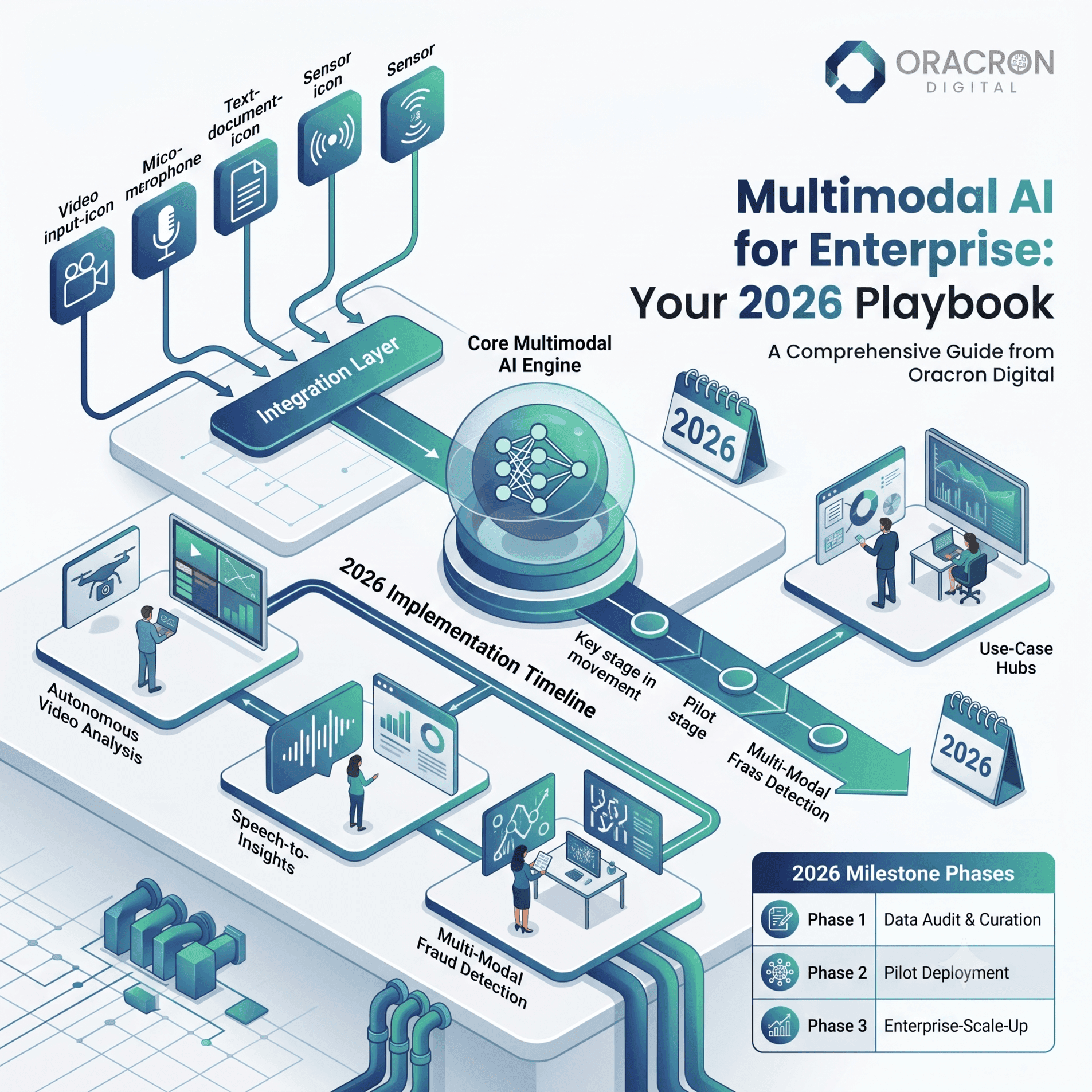
Multimodal AI for enterprise adoption in 2026 is critical. It bridges data silos, offering unified intelligence. Businesses can maximize ROI and future-proof their operations. This approach integrates diverse data types for deeper insights.
Key Takeaways for Multimodal AI for Enterprise
- Multimodal AI integrates diverse data.
- It unlocks unified intelligence from silos.
- Strategic adoption requires a clear playbook.
- Focus on data quality and governance.
- Measure ROI to ensure business impact.
What is Multimodal AI and Why Does it Matter for Enterprise?
Multimodal AI processes and understands information. It combines various data types. These include text, images, audio, and video. Traditional AI models work with single data types. Multimodal AI offers a holistic view. It mirrors human perception capabilities. This leads to more context-aware insights.
This technology is a surging trend. Recent announcements highlight its rapid growth. Top models like Google Gemini 3.5 Flash lead innovation. OpenAI GPT-5 also enhances multimodal capabilities. Such advancements drive enterprise adoption. Investment in multimodal foundation models is significant. Japan is developing a new model with NVIDIA. The market may reach $12 billion by 2026. It shows a 44.52% CAGR to 2035. This market expansion demonstrates real business impact.
Businesses face complex data environments. Siloed data limits strategic insights. Multimodal AI connects these disparate sources. It enables smarter decision-making. Learn more about What is multimodal AI? and its enterprise applications. Oracron Digital helps integrate these advanced AI solutions. Explore our AI Solutions for your business.
Bridging Data Silos: The Core Challenge and Opportunity for Multimodal AI for Enterprise
Enterprises often struggle with data silos. Information resides in disconnected systems. Multimodal AI for enterprise offers a powerful solution. It enables "multimodal data integration business" processes. This combines text, images, and sensor data seamlessly. Such integration creates "unified data intelligence AI".
Data quality and alignment are crucial. Poor data can undermine AI initiatives. A robust strategy ensures data readiness. It involves cleaning and standardizing diverse inputs. Multimodal AI then processes this integrated view. This unlocks deeper, more actionable insights. It improves operational efficiency.
Overcoming these integration challenges is vital. It lays the groundwork for powerful AI applications. Oracron Digital provides expertise in this area. For more on optimizing data processes, see Oracron Digital's guide on Enterprise AI Process Intelligence.
Developing Your 2026 Multimodal AI Playbook: Strategic Steps
Crafting a strategic playbook is essential. It guides successful "multimodal AI for enterprise" adoption. This ensures maximum ROI and sustainable impact. A structured approach navigates complexities. It helps integrate diverse AI technologies. Oracron Digital assists in developing this framework.
How do you select multimodal foundation models?
Selecting the right models is a primary step. Evaluate their capabilities and enterprise readiness. Consider models like Google Gemini 3.5 Flash. OpenAI GPT-5 also offers advanced features. These "multimodal foundation models" are powerful tools. They form the core of "enterprise AI vision language models". Their selection impacts system performance. For insights into top models, read about The Best Multimodal Models for Enterprise AI in 2026. Oracron Digital helps assess and implement these models effectively.
What are key cross-modal AI applications for your business?
Multimodal AI offers diverse business applications. These "cross-modal AI applications" deliver real value. Examples include enhanced customer support. AI analyzes voice, text, and sentiment. Predictive maintenance is another strong use case. It integrates sensor data, images, and text. Advanced quality control uses visual and process data. "Multimodal AI use cases" also cover intelligent document processing. These applications enhance operational efficiency. Explore more about The Rise of Multimodal AI and Its Impact on Business Applications. Oracron Digital helps identify and implement these solutions. Our insights on Enterprise AI Copilots for Business Functions also apply.
How can you ensure robust multimodal data integration and governance?
Robust data integration is fundamental. It involves combining disparate data sources. This ensures a unified view for AI models. Data quality and ethical governance are vital. Enterprises must establish clear data pipelines. Consider these key elements for success:
- Standardize diverse data formats.
- Implement strong data validation checks.
- Establish clear data ownership.
- Monitor data lineage and access.
- Ensure compliance with regulations.
These steps build trust in AI outputs. They also mitigate potential risks. Oracron Digital provides governance frameworks.
Measuring ROI and Future-Proofing with Multimodal AI
Measuring ROI for "multimodal AI for enterprise" is crucial. It justifies investment and demonstrates value. Define clear metrics before deployment. Track improvements in efficiency and accuracy. Monitor cost savings and new revenue streams. Oracron Digital helps develop tailored ROI frameworks. This ensures transparent and auditable outcomes.
Future-proofing involves scalable solutions. Design for growth and evolving data needs. Adopt flexible architectures for model updates. Prioritize responsible AI practices. These factors ensure long-term sustainability. The market for multimodal AI is projected to grow. This growth highlights the importance of future readiness.
Stay ahead of the curve in 2026. Learn more about Exploring the Power of Multimodal AI Models for Innovation in 2026. Consider these steps to measure ROI effectively:
- Establish baseline performance metrics.
- Define specific, measurable objectives.
- Track operational efficiency gains.
- Quantify enhanced decision-making impact.
- Evaluate customer satisfaction improvements.
For ethical AI guidelines, review Oracron Digital's insights on Operationalizing Responsible AI for Enterprise.
Frequently Asked Questions About Multimodal AI for Enterprise
What are common enterprise applications for multimodal AI?
Multimodal AI finds use in enhanced customer support. It analyzes voice, text, and sentiment. Comprehensive data analysis integrates sensor data, images, and text for predictive maintenance. Advanced quality control in manufacturing uses visual inspection and process data. It also aids in intelligent document processing and enterprise search.
How does multimodal AI differ from traditional AI models for businesses?
Traditional AI models typically process a single data type. They work with text or images in isolation. Multimodal AI integrates and reasons across multiple modalities. This includes text, images, audio, and video simultaneously. It enables a more holistic understanding. This mirrors human perception for richer insights and decisions.
What are the key challenges in implementing multimodal AI for enterprises?
Key challenges include integrating diverse, siloed data sources. Ensuring data quality and alignment across modalities is vital. Managing significant computational complexity for training and inference is also hard. Enterprises must address ethical considerations. These include bias, privacy, and security in complex data environments.
Next Steps with Oracron Digital
Is your enterprise ready for multimodal AI? Oracron Digital can guide your adoption journey. We specialize in advanced AI solutions. Our experts help bridge data silos. We deliver unified intelligence for your business. Contact Oracron Digital today to discuss your strategy. Explore our full range of AI Solutions.